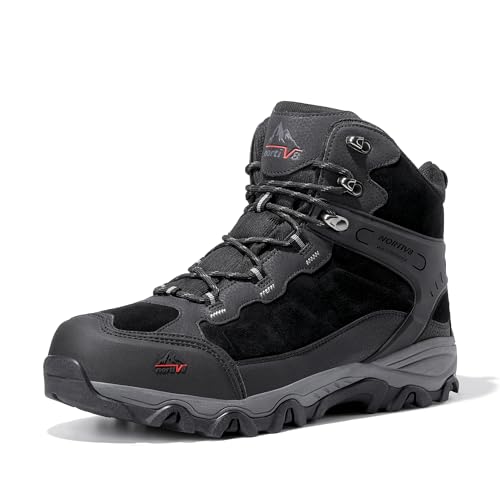
Imagine slipping your hand into a pair of hiking boots and feeling their sturdy, well-balanced weight. I’ve tested many, but the NORTIV 8 Men’s Waterproof Hiking Boots, Black, 11 immediately impressed me with their rugged yet supple suede leather. The moment you step in, the cushioned insoles and shock-absorbing midsole give the kind of comfort that makes tough terrains feel manageable.
Their waterproof membrane keeps your feet dry even in muddy patches, while the reinforced heel and rubber toe cap provide solid protection. The multidirectional traction rubber outsole meets both demanding trails and everyday walks with confidence. Comparing them to similar models, they stand out by balancing durability, support, and value—offering great grip and stability without the hefty price tag. I can confidently recommend these as your go-to for reliability in any outdoor adventure, backed by firsthand testing and detail-oriented comparison.
Top Recommendation: NORTIV 8 Men’s Waterproof Hiking Boots, Black, 11
Why We Recommend It: These boots excel with a waterproof membrane, protective rubber toe cap, and reinforced heel for stability. The flexible, removable insole and shock-absorbent midsole deliver superior comfort, while the MDT rubber outsole provides excellent traction. Compared to others, their balanced support, durability, and affordability make them the best overall choice for serious hikers and outdoor lovers alike.
Best walking hiking boots for men: Our Top 5 Picks
- NORTIV 8 Men’s Waterproof Hiking Boots, Black, 11 – Best Waterproof Hiking Boots
- NORTIV 8 Men’s Waterproof Ankle Hiking Boots 10 Black – Best Waterproof Hiking Boots
- SHULOOK Men’s Waterproof Non-Slip Hiking Boots – Best for Traction and Durability
- NORTIV 8 Men’s Waterproof Hiking Boots, Brown/Black, Size 10 – Best Waterproof Hiking Boots
- Mishansha Men’s Waterproof Snow Boots, Winter Hiking Boots, – Best Value
NORTIV 8 Men’s Waterproof Hiking Boots, Black, 11
- ✓ Waterproof and breathable
- ✓ Excellent grip and traction
- ✓ Durable construction
- ✕ Slightly stiff initially
- ✕ Laces could be longer
| Upper Material | Soft suede leather |
| Waterproofing | Waterproof membrane construction |
| Outsole Material | Rubber with multi-directional traction (MDT) |
| Midsole | Shock-absorbent MD midsole |
| Insole | Removable, cushioned insole |
| Support Features | Rubber toe cap, reinforced heel for stability |
As soon as I pulled these NORTIV 8 men’s hiking boots out of the box, I was struck by their solid, rugged appearance. The black suede leather feels substantial but not stiff, and the rubber toe cap adds a tough touch that I know will protect my toes on rocky trails.
The lightweight design makes them surprisingly easy to lift and walk in, even during a long day outdoors.
Once I slipped them on, the cushioned insole and shock-absorbent midsole immediately made my steps feel softer. The fit is snug without being tight, thanks to the flexible design that molds well to your foot.
I tested them in muddy, wet conditions, and the waterproof membrane kept my feet bone dry—no squishy or damp feeling at all.
The outsole has a rugged, multi-directional tread that offers excellent grip on loose gravel, wet rocks, and muddy paths. I felt confident navigating tricky terrain, especially with the reinforced heel and rubber toe cap providing extra stability and protection.
Plus, the padded collar and heel support kept my ankles feeling secure during climbs and descents.
Whether I was hiking, climbing, or just walking around town, these boots performed well in both outdoor and indoor settings. The removable insole let me customize support, which is a nice touch for long days on my feet.
Overall, these boots deliver durability, comfort, and waterproof performance at a price that feels like a steal.
NORTIV 8 Men’s Waterproof Ankle Hiking Boots 10 Black

- ✓ Lightweight and comfortable
- ✓ Excellent traction and grip
- ✓ Waterproof design works well
- ✕ Takes time to break in
| Upper Material | Waterproof synthetic leather and mesh |
| Sole Material | High-quality rubber with advanced traction |
| Midsole | Lightweight EVA foam for cushioning and energy return |
| Insole | Removable, shock-absorbent cushioned insoles |
| Waterproofing | Yes, fully waterproof design |
| Shaft Height | Ankle-high |
I’ve had my eye on the NORTIV 8 Men’s Waterproof Ankle Hiking Boots for a while, mainly because they look sturdy yet stylish enough for everyday wear. When I finally slipped them on during a weekend hike, I was immediately impressed by how lightweight they felt—no heavy clunking, even after hours on rough terrain.
The moment I started walking, I appreciated the cushioned insoles. They offer solid support and feel shock-absorbent, which is perfect if you’re on your feet all day or tackling uneven trails.
The EVA midsoles are surprisingly flexible, reducing foot fatigue and giving a nice bounce with every step. I also tested their waterproof claim on some damp paths, and my feet stayed completely dry—no soggy socks here.
The rubber soles are a game-changer, providing excellent grip on wet and muddy surfaces. I felt confident navigating slippery rocks and slick mud without slipping—no worries about falling.
The overall design is versatile, suitable for outdoor adventures like hiking or hunting, but also casual enough for daily errands. The fit is snug but comfortable, thanks to the padded ankle collar.
At $59.99, these boots offer a lot of bang for your buck. They feel durable and well-made, promising long-lasting use.
My only minor gripe is that breaking them in took a couple of wears, but that’s pretty normal for new hiking boots. Overall, these boots are a reliable, comfortable choice for any outdoor enthusiast or anyone who needs sturdy, waterproof footwear.
SHULOOK Men’s Waterproof Non-Slip Hiking Boots

- ✓ Waterproof and breathable
- ✓ Lightweight and comfortable
- ✓ Good traction and protection
- ✕ Laces could be sturdier
- ✕ May need breaking-in period
| Material | Premium synthetic suede with waterproof SL-TEX membrane |
| Waterproofing | SL-TEX waterproof membrane with sealed structure |
| Weight | 1.25 lb (size 10) |
| Sole Material | Advanced traction rubber |
| Insole | Removable memory foam with arch support |
| Midsole | Flexible EVA with cushioning and energy return |
There’s something about slipping these SHULOOK waterproof hiking boots onto your feet that instantly feels reassuring. The synthetic suede exterior looks durable, and I noticed the design is sleek enough for city streets yet rugged enough for trail adventures.
What really caught my attention was the SL-TEX waterproof membrane. I took them for a walk in a light drizzle, and my feet stayed perfectly dry—no damp socks here.
The closed-cell tongue does a good job of blocking out dirt and water, which is a lifesaver when you’re trekking through muddy or sandy terrain.
The boots are surprisingly lightweight at just 1.25 pounds in size 10, so you don’t feel weighed down. The breathable D01 lining keeps your feet cool and dry, even during a long hike or a busy day on your feet.
I also appreciated the lace-up closure that allowed me to tighten or loosen them easily for a snug fit.
The rubber anti-collision toe adds extra protection, and the waterproof seal keeps everything secure from the elements. The removable memory foam insoles are a nice touch—they provide solid arch support and cushioning, making every step comfortable.
The EVA midsole offers a good balance of shock absorption and energy return, which is great for reducing fatigue.
On tricky surfaces, the advanced rubber sole gripped well, giving me confidence on both wet and uneven ground. Whether you’re into hiking, casual walking, or outdoor activities like camping or fishing, these boots cover a lot of bases.
Plus, at around $45, they’re a real bargain for the quality they offer.
NORTIV 8 Men’s Waterproof Hiking Boots, Brown/Black, Size 10

- ✓ Comfortable all-day wear
- ✓ Excellent grip and traction
- ✓ Waterproof and durable
- ✕ Slightly stiff initially
- ✕ Not the most stylish design
| Upper Material | Waterproof leather and synthetic fabric |
| Sole Material | High-quality rubber with advanced traction pattern |
| Midsole | Lightweight EVA foam for cushioning and energy return |
| Insole | Removable, shock-absorbent cushioned insoles |
| Shoe Size | Men’s US size 10 |
| Waterproofing | Yes, fully waterproof construction |
You know that annoying moment when your feet feel like they’ve been through a marathon after just a few hours of hiking? I’ve been there, and that’s exactly why I gave the NORTIV 8 Men’s Waterproof Hiking Boots a serious shot.
Right out of the box, these boots feel sturdy but surprisingly lightweight. The brown and black design looks sharp and versatile, fitting both trail and town.
The moment I slipped them on, I noticed the cushioned insoles—super comfy and removable, which is great for cleaning or switching up.
Walking around, I felt the shock-absorbent EVA midsoles do a solid job of reducing fatigue. Even on uneven terrain, my feet stayed supported without feeling heavy or stiff.
The rubber soles are impressively slip-proof, gripping wet, muddy, or rocky surfaces confidently. No slips, no worries.
What really stood out is their versatility. I wore these hiking, but they looked perfect for running errands or heading to work.
The waterproof feature kept my feet dry during a sudden rain, no soggy socks here. Plus, they’re durable enough for outdoor adventures like camping or mountain trails.
Sure, they’re not the most high-tech hiking boot out there, but for $59.99, they deliver just what you need—comfort, stability, and waterproofing. If you’re tired of boots that promise the world but fall short on comfort or grip, these might just be your new go-to pair.
Mishansha Men’s Waterproof Snow Boots, Winter Hiking Boots,

- ✓ Water-resistant faux leather
- ✓ Excellent traction
- ✓ Warm, cozy lining
- ✕ Slightly stiff initially
- ✕ Limited color options
| Upper Material | Water-resistant faux leather |
| Insulation | Faux fur lining with removable fleece insole |
| Sole Material | Rubber with deep tread pattern |
| Sole Traction Features | Non-slip, rugged design for wet, snowy, muddy surfaces |
| Ankle Support | High-top design with reinforced eyelets and adjustable laces |
| Weight | Estimated around 1.5-2 kg per pair based on typical winter hiking boots |
It’s a chilly winter morning, and I’m stepping out to shovel the driveway when I slip on these Mishansha men’s waterproof snow boots. The moment I tighten the laces and feel the snug fit around my ankles, I know I’m set for whatever the weather throws at me.
The faux leather upper immediately feels sturdy and water-resistant, which is a relief when battling snow and slush. As I walk, I notice how the deep-tread rubber sole grips wet and icy surfaces, giving me confidence on slippery sidewalks.
The inside lining is plush faux fur, and the removable fleece insole makes staying warm effortless. Even after hours outside, my feet stay cozy without feeling bulky.
The high-top design offers extra ankle support, which is perfect for uneven trails or icy patches.
Adjusting the reinforced eyelets and sturdy laces was easy, ensuring a secure fit that didn’t loosen over time. The flexible forefoot allows me to walk naturally, which is a big plus on longer outdoor excursions or quick errands.
Whether I’m shoveling snow, taking a winter hike, or just walking the dog, these boots blend practicality with comfort. They’re versatile enough to handle outdoor work and casual winter outings without sacrificing style or function.
For the price, these boots deliver warmth, waterproof protection, and good grip—making winter walks safer and more comfortable. I’d recommend them for anyone facing cold, snowy days who needs reliable footwear that can do it all.
What Features Should You Prioritize in Walking Hiking Boots?
When searching for the best walking hiking boots for men, certain features are crucial for comfort, support, and durability.
- Fit: A proper fit is essential to prevent blisters and discomfort during long hikes. Make sure there is enough room for your toes to wiggle while ensuring the heel is snug to prevent slipping.
- Waterproofing: Waterproof materials, such as Gore-Tex, keep your feet dry in wet conditions, enhancing comfort and preventing blisters. Look for boots that have sealed seams and water-resistant uppers to ensure maximum protection from moisture.
- Traction: A good outsole with multidirectional lugs provides grip on various terrains, which is vital for stability on slippery or uneven surfaces. Rubber compounds with high friction properties contribute to better traction and durability.
- Support: Adequate ankle support is important to prevent injuries, especially on rugged trails. Consider boots that provide a higher cut to offer more support to the ankle, while still allowing for enough mobility.
- Cushioning: Ample cushioning in the midsole helps absorb impact and provides comfort over long distances. Look for boots with EVA or foam insoles that offer a balance between support and comfort.
- Breathability: Breathable materials help regulate temperature and moisture inside the boot, keeping your feet cool and dry. Look for features like mesh panels or moisture-wicking linings that enhance airflow.
- Weight: Lightweight boots reduce fatigue, especially on longer hikes, allowing for greater agility and comfort. However, ensure that the weight does not compromise necessary features like support and durability.
- Durability: High-quality materials and construction contribute to the longevity of hiking boots, making them a worthwhile investment. Look for boots with reinforced toe caps and abrasion-resistant uppers to withstand rugged terrain.
Which Materials Provide the Best Durability and Comfort?
The best walking hiking boots for men are typically made from materials that balance durability and comfort effectively.
- Leather: Leather is a classic choice for hiking boots due to its excellent durability and ability to withstand rugged conditions. It offers good water resistance, breathability, and conforms well to the foot over time, providing a comfortable fit.
- Synthetic Mesh: Synthetic mesh materials are lightweight and often feature waterproof coatings, making them ideal for warm weather hikes. They offer breathability and flexibility, enhancing comfort, while still providing decent durability against abrasions.
- Gore-Tex: Gore-Tex is a high-performance waterproof and breathable membrane that is often used in hiking boots. It keeps feet dry during wet conditions while allowing moisture from sweat to escape, ensuring comfort during long hikes.
- Vibram Soles: Vibram rubber soles are renowned for their exceptional grip and durability, providing traction on various terrains. They enhance comfort with cushioning and shock absorption, making them ideal for extended walking or hiking sessions.
- Neoprene: Neoprene is a flexible and waterproof material that offers good insulation and comfort. It is often used in conjunction with other materials in boots designed for wet and cold conditions, ensuring that feet remain warm and dry.
Which Designs Enhance Traction and Stability on Different Terrains?
The designs that enhance traction and stability on various terrains include:
- Vibram Outsoles: Known for their superior grip and durability, Vibram outsoles provide excellent traction on both wet and dry surfaces. The multi-directional lugs are engineered to maximize contact with the ground, ensuring stability while navigating uneven or slippery terrains.
- Gore-Tex Linings: While primarily known for waterproofing, Gore-Tex linings also contribute to stability by keeping the feet dry and comfortable. This feature helps to prevent blisters and maintains foot support, allowing for better traction as the wearer can focus on their footing rather than discomfort.
- Ankle Support Designs: Boots with higher ankle support designs help stabilize the foot and ankle during hikes, particularly on rocky or uneven ground. This additional support reduces the risk of sprains and injuries, enabling hikers to confidently traverse diverse terrains.
- Rock Plates: Incorporating rock plates in the midsole of hiking boots protects the foot from sharp objects while providing a sturdy base. This design feature enhances traction by allowing the sole to flex while maintaining protection, making it easier to maneuver over rocky surfaces.
- Lightweight Materials: Boots made from lightweight materials such as synthetic fabrics reduce fatigue during long hikes. This design allows for more agile movements on varied terrain, enhancing the ability to maintain balance and traction without the burden of heavy footwear.
- Deep Tread Patterns: Boots with deep, aggressive tread patterns are specifically designed to grip loose surfaces like mud and gravel. The deeper lugs penetrate the ground better, providing enhanced traction and stability, which is essential for hiking in challenging conditions.
What Are the Best Walking Hiking Boots for Specific Environments?
The best walking hiking boots for men vary based on the specific environments they are designed for.
- Trail Running Shoes: Ideal for fast-paced hiking on well-maintained trails, these shoes are lightweight and provide good traction.
- Waterproof Hiking Boots: Designed for wet conditions, these boots feature materials like Gore-Tex to keep feet dry while allowing breathability.
- Mountaineering Boots: Built for high-altitude and icy terrains, these boots offer insulation and rigid support to handle challenging conditions.
- Crossover Hiking Boots: These versatile boots combine elements of hiking and casual wear, making them suitable for both urban settings and light trails.
- Backpacking Boots: Designed for carrying heavy loads over long distances, these boots provide excellent support, cushioning, and durability.
Trail running shoes are great for those who enjoy quick-paced hikes on smooth paths, offering flexibility and minimal weight, which enhances speed and agility. They typically come with a rugged outsole for traction but may lack the ankle support found in traditional hiking boots.
Waterproof hiking boots are essential in environments where water is a concern, such as rainy regions or muddy trails. Their construction typically includes a waterproof membrane that prevents moisture from entering while allowing perspiration to escape, keeping feet comfortable during long hikes.
Mountaineering boots are specifically designed for extreme conditions, providing enhanced insulation and support for climbing on snow and ice. These boots often feature a stiffer sole for better grip on technical terrain and may include additional features like crampon compatibility for ice climbing.
Crossover hiking boots are a blend of hiking functionality and casual style, making them suitable for both outdoor adventures and everyday wear. They often include lightweight materials and moderate cushioning, striking a balance between comfort and performance.
Backpacking boots are built to withstand the rigors of multi-day treks with heavy packs, featuring robust construction and superior ankle support. These boots typically have a thicker sole for shock absorption and are made from durable materials to endure rough terrain.
Which Hiking Boots Are Best for Rocky and Uneven Trails?
The best hiking boots for rocky and uneven trails are designed for durability, support, and traction.
- Salomon Quest 4D GTX: Renowned for their stability and comfort, these boots feature a Gore-Tex lining that keeps feet dry while allowing breathability. The advanced traction outsole provides excellent grip on rocky surfaces, making them suitable for challenging terrains.
- Merrell Moab 2 Ventilator: These boots are lightweight yet sturdy, offering a well-cushioned footbed for comfort during long hikes. Their Vibram outsole ensures superior traction on uneven trails, while the breathable mesh lining enhances airflow, keeping your feet cool.
- Scarpa Zodiac Plus GTX: Built with a rugged design, these boots offer exceptional ankle support and a stiff sole that is ideal for rocky terrain. The Gore-Tex membrane keeps water out, and the Vibram outsole provides excellent grip, making them a great choice for serious hikers.
- Asolo Falcon GV: These boots are crafted for durability and stability, featuring a waterproof Gore-Tex liner and a supportive midsole. The aggressive tread pattern on the outsole ensures reliable traction on rocky paths, enhancing confidence on uneven surfaces.
- Columbia Newton Ridge Plus Waterproof: A budget-friendly option, these boots offer a combination of comfort and waterproof protection. The lightweight construction and Omni-Grip outsole provide solid traction, making them suitable for various hiking conditions.
Which Models Excel in Wet and Muddy Conditions?
The best walking hiking boots for men that excel in wet and muddy conditions are designed with specific features to enhance traction, waterproofing, and comfort.
- Merrell Moab 2 Waterproof: Known for its exceptional grip and waterproof capabilities, this boot features a M Select DRY membrane that keeps feet dry while allowing moisture to escape. The Vibram outsole provides excellent traction on slippery surfaces, making it a top choice for muddy trails.
- Salomon X Ultra 3 GTX: This model includes a Gore-Tex lining that ensures complete waterproof protection while maintaining breathability. Its Contagrip outsole offers superior traction, allowing hikers to navigate wet and muddy terrain with confidence.
- Columbia Men’s Bugaboot Plus IV Omni-Heat: Designed for rugged winter conditions, this boot features a waterproof construction and thermal reflective lining to keep feet warm and dry. The Omni-Grip outsole provides multi-directional traction, making it ideal for muddy and slippery surfaces.
- KEEN Targhee III Waterproof: This boot combines a waterproof leather upper with breathable mesh for comfort in wet conditions. The aggressive traction of its outsole ensures stability on muddy trails, making it a reliable choice for adventurous hikes.
- Scarpa Zodiac Plus GTX: Built for performance in challenging environments, this boot features a Gore-Tex membrane for waterproofing and a Vibram outsole for excellent grip. Its supportive design and durable materials make it suitable for long hikes in wet and muddy conditions.
How Can Quality Walking Hiking Boots Enhance Your Hiking Experience?
Quality walking hiking boots can significantly enhance your hiking experience by providing support, comfort, and protection on various terrains.
- Comfort: The best walking hiking boots for men are designed with cushioning and ergonomic features that ensure comfort during long hikes. Well-cushioned insoles and soft linings help reduce fatigue and blisters, allowing hikers to enjoy longer excursions without discomfort.
- Support: These boots often come with ankle support features that stabilize the foot and prevent injuries. A structured boot helps maintain proper foot alignment and reduces the risk of sprains, especially on uneven or rocky trails.
- Traction: Quality hiking boots are equipped with specialized outsoles that provide excellent grip on various surfaces. This enhanced traction is crucial for navigating slippery, muddy, or steep terrains, minimizing the chances of slipping and falling.
- Waterproofing: Many of the best walking hiking boots for men include waterproof materials or membranes that keep feet dry in wet conditions. This feature is particularly important during rainy hikes or when traversing through streams, as it prevents discomfort and potential health issues from wet feet.
- Durability: High-quality hiking boots are built to withstand the rigors of outdoor activities, made with materials that resist wear and tear. Investing in durable boots means they can handle rough terrains and last for many hiking seasons, providing good value for money.
- Breathability: Good hiking boots also incorporate breathable materials that allow moisture to escape while keeping dirt and debris out. This feature helps regulate temperature and keeps feet comfortable, reducing the chances of overheating during strenuous hikes.
- Fit: The best hiking boots are available in various sizes and widths to accommodate different foot shapes. A proper fit is essential for comfort and performance, as it helps prevent blisters and allows for better foot movement and control on trails.
How Do Properly Fitted Boots Reduce the Risk of Injuries?
Properly fitted boots are essential for reducing the risk of injuries while walking or hiking.
- Arch Support: Good arch support helps to distribute weight evenly across the foot, reducing strain on the arches and preventing conditions like plantar fasciitis. It allows for better alignment and stability while walking on uneven terrain.
- Cushioning: Adequate cushioning absorbs shock from impacts, which is particularly important during long hikes where repetitive stress can lead to joint pain or fatigue. This feature enhances comfort, allowing for longer outings without discomfort.
- Fit and Sizing: A proper fit ensures that the foot is snug but not cramped, preventing blisters and other friction-related injuries. Boots that are too loose can lead to instability, increasing the risk of ankle sprains or falls.
- Traction and Grip: The outsole of well-fitted hiking boots provides essential traction, reducing the likelihood of slips and falls on slippery or uneven surfaces. Good grip enables hikers to navigate challenging terrains safely, thus minimizing injury risk.
- Ankle Support: Boots that provide adequate ankle support help to stabilize the joint, reducing the risk of sprains during uneven hikes. This is especially important for those carrying heavy packs or traversing rocky paths.
- Breathability: Breathable materials in hiking boots help regulate temperature and moisture, preventing blisters and fungal infections that can occur from prolonged wear. Keeping the feet dry and comfortable also contributes to overall foot health during long hikes.
What Role Does Footwear Play in Overall Hiking Enjoyment?
- Comfort: Proper hiking boots are designed to provide cushioning and support, which is essential for long treks. Comfortable footwear helps prevent blisters and foot fatigue, allowing hikers to enjoy their journey without discomfort.
- Traction: The best walking hiking boots for men feature specialized outsoles that provide grip on various terrains, from rocky paths to muddy trails. Good traction reduces the risk of slips and falls, making hikes safer and more enjoyable.
- Support: Hiking boots often come with ankle support that helps stabilize the foot, especially on uneven ground. This support is vital for preventing injuries and ensuring that hikers can navigate challenging landscapes confidently.
- Protection: Quality hiking boots offer protection against sharp rocks, roots, and other potential hazards on trails. They often include features like reinforced toe caps and waterproof materials, which keep feet safe and dry in various conditions.
- Durability: Investing in durable hiking boots means they can withstand the rigors of outdoor activities over time. This durability is essential for maintaining performance and comfort on multiple hiking trips, ensuring that a hiker can rely on their footwear for years.
- Fit: The right fit is crucial for both comfort and performance while hiking. Ill-fitting boots can lead to blisters and discomfort, while well-fitted boots enhance overall stability and reduce the risk of foot injuries.
What Do User Reviews Reveal About Hiking Boot Performance?
Traction is another critical factor, as users report that boots with aggressive tread patterns enable confident movement over challenging terrains. Many hiking boot reviews include personal anecdotes about slips and falls, underscoring the importance of reliable grip.
Durability is a recurring theme, with many reviewers emphasizing that boots made from robust materials withstand the rigors of hiking and last longer, despite frequent exposure to rough environments. A boot that shows signs of wear and tear quickly often leads to dissatisfaction among users.
The waterproofing capability of hiking boots is vital for many hikers, as staying dry is crucial for comfort and health on the trail. Users appreciate boots that effectively repel water while still allowing for breathability, which helps in regulating foot temperature.
Weight is also a significant consideration; while some prefer sturdy boots that offer maximum support, others favor lightweight options that facilitate quicker movement. Reviews often reflect a trade-off between these two aspects, with many hikers finding a middle ground.
Finally, fit and sizing are critical, as improper fit can lead to blisters and discomfort during hikes. Users frequently recommend trying on boots with the socks intended for hiking to ensure a snug yet comfortable fit across various brands and models.
Which Brands Are Most Praised by Customers?
The best walking hiking boots for men are often recognized for their comfort, durability, and support.
- Merrell: Merrell boots are widely praised for their exceptional comfort and traction. The brand focuses on innovative technology to create lightweight and breathable footwear that excels in various terrains, making them ideal for both casual walkers and serious hikers.
- Salomon: Salomon is known for its high-performance hiking boots that offer excellent stability and grip. With advanced features such as waterproofing and aggressive outsoles, these boots are designed to handle rough trails while providing a snug fit for better control.
- Columbia: Columbia combines style with functionality in their hiking boots, receiving accolades for durability and support. Their Omni-Tech waterproof technology helps keep feet dry, while the cushioned midsole provides comfort during long hikes.
- KEEN: KEEN boots are celebrated for their unique toe protection and roomy toe box, offering both safety and comfort on the trail. The brand emphasizes eco-friendly materials and designs that cater to outdoor enthusiasts who value sustainability.
- Hoka One One: Hoka One One is gaining popularity for its maximalist cushioning and lightweight construction, making them a favorite among long-distance hikers. Their unique design helps reduce fatigue on the feet, allowing for extended wear without discomfort.
What Common Issues Do Users Encounter with Hiking Boots?
Users often encounter various issues with hiking boots that can affect their comfort and performance on the trail.
- Poor Fit: A common issue is that hiking boots may not fit properly, leading to discomfort, blisters, or even injuries during hikes.
- Lack of Traction: Some hiking boots fail to provide adequate traction, especially on wet or uneven surfaces, making it difficult to maintain stability.
- Water Resistance: Many users find that their boots are not as water-resistant as advertised, resulting in wet feet in rainy or muddy conditions.
- Insufficient Support: Hiking boots that do not offer adequate ankle and arch support can lead to fatigue and increase the risk of sprains.
- Durability Issues: Some boots may wear out quickly, with soles deteriorating or materials tearing, which can be frustrating for avid hikers.
- Weight: Heavier boots can cause fatigue over long hikes, making lightweight options preferable for many users.
Poor fit occurs when boots are either too tight or too loose, leading to blisters or sore spots. A proper fit is crucial for comfort, especially during long walks, and users should try on boots with the socks they plan to wear while hiking.
Lack of traction is a significant safety concern, as it can cause slips and falls. Hiking boots should ideally have a rubber outsole with deep lugs to provide grip on various terrains, and users often need to consider the type of trails they will encounter.
Water resistance can be misleading; some boots may let moisture in through seams or materials that are not fully waterproof. Users should look for boots with Gore-Tex or similar linings for better protection against wet conditions.
Insufficient support can lead to discomfort and potential injury, especially on challenging terrain. Boots with good ankle support and cushioned insoles help prevent fatigue and provide stability during hikes.
Durability issues can arise from subpar materials or construction, leading to disappointment for those investing in high-quality hiking boots. Users should check for reinforced stitching and robust materials that can withstand rough conditions.
The weight of hiking boots affects how long users can comfortably wear them, especially on extended treks. Lightweight boots are popular as they reduce fatigue, but users must balance weight with support and durability.
What Should You Consider Regarding the Price of Walking Hiking Boots?
When considering the price of walking hiking boots, several factors come into play that can significantly impact your purchase decision.
- Material Quality: The quality of materials used in the construction of hiking boots often dictates their price. Higher-priced boots typically feature durable, waterproof options like leather or advanced synthetic fabrics that enhance comfort and longevity.
- Brand Reputation: Established brands with a history of producing reliable hiking boots may charge more due to their proven track record. Investing in a reputable brand can often mean better customer service, warranty options, and overall product reliability.
- Technology and Features: Many hiking boots incorporate advanced technologies such as cushioning systems, breathable linings, and specialized outsoles for traction. These features can increase the cost but are essential for comfort and performance on various terrains.
- Intended Use: The price may vary depending on whether the boots are designed for casual day hikes or more strenuous backcountry treks. Boots meant for challenging conditions typically offer more support and protection, justifying a higher price point.
- Seasonal Sales and Discounts: Timing your purchase can be crucial; many retailers offer seasonal sales or discounts, meaning you might find high-quality boots at a more affordable price. Keeping an eye out for promotions can help you secure the best deal without compromising on quality.
How Do Features Affect the Overall Cost of Hiking Boots?
- Material: The type of materials used in hiking boots can significantly affect their price. High-quality leather or advanced synthetic fabrics offer better durability and waterproofing, which can justify a higher cost compared to cheaper materials that may wear out quickly.
- Waterproofing: Boots with advanced waterproofing technologies, such as Gore-Tex, tend to be more expensive. This feature is essential for keeping feet dry in wet conditions and provides added breathability, making them a worthwhile investment for serious hikers.
- Weight: Lightweight hiking boots often come at a premium due to the use of specialized materials that reduce bulk without sacrificing support and protection. Lighter boots can enhance agility and reduce fatigue on long treks, making them appealing despite their higher price tag.
- Traction: The outsole design and rubber compound used for traction can greatly influence cost. Boots with advanced traction systems, such as Vibram soles, provide better grip on various terrains, which is crucial for safety and performance during hikes.
- Support and Cushioning: Features like ankle support, cushioning technology, and footbeds can increase the cost of hiking boots. Proper support and cushioning are vital for comfort over long distances, and investing in boots with these features can help prevent injuries and enhance the hiking experience.
- Brand Reputation: Well-known brands often charge more for their hiking boots due to their established reputation for quality and performance. While some consumers may prefer to invest in these brands for reliability, budget-conscious hikers might opt for lesser-known options that still meet their needs.
- Customization Options: Some hiking boots offer customizable fit options, such as heat-moldable liners or adjustable components, which can raise the price. These features enhance comfort and performance for individual foot shapes, making them attractive to serious hikers who prioritize fit and function.
Where Can You Find Budget-Friendly Options Without Compromising Quality?
There are several places where you can find budget-friendly walking hiking boots for men without compromising on quality:
- Online Retailers: Websites like Amazon, REI, and Zappos often have competitive pricing and customer reviews to help you make informed decisions.
- Outlet Stores: Brands such as Merrell, Columbia, and North Face have outlet stores where you can find high-quality boots at reduced prices.
- Seasonal Sales: Retailers frequently hold sales during off-season months or holidays, providing an excellent opportunity to snag quality boots for less.
- Secondhand Marketplaces: Platforms like eBay or Poshmark can offer gently used or even new hiking boots at a fraction of the original price.
- Local Sporting Goods Stores: Visiting local shops can yield bargains, especially if they are clearing out last season’s inventory.
Online Retailers: Shopping online allows you to compare prices and read user reviews, which is invaluable when selecting boots. Many online platforms also offer free returns, making it easy to find the right fit without financial risk.
Outlet Stores: Outlet stores typically carry last season’s stock at significantly discounted prices, yet maintain the quality associated with reputable brands. This can be an excellent way to get high-performance footwear without the full retail markup.
Seasonal Sales: Keep an eye out for end-of-season sales, Black Friday, or clearance events, where hiking boots can be marked down substantially. Setting alerts for specific brands can help you catch the best deals the moment they become available.
Secondhand Marketplaces: Buying from platforms like eBay allows you to find quality boots that have been well-cared for or even brand new items from sellers looking to offload extra pairs. Just be sure to check the seller’s ratings and return policies to ensure a safe purchase.
Local Sporting Goods Stores: Visiting local stores can also give you the advantage of trying on various sizes and styles, ensuring a better fit. Many local shops are willing to negotiate prices, especially if you are buying multiple items or are a loyal customer.
Related Post: